Start with everyday needs
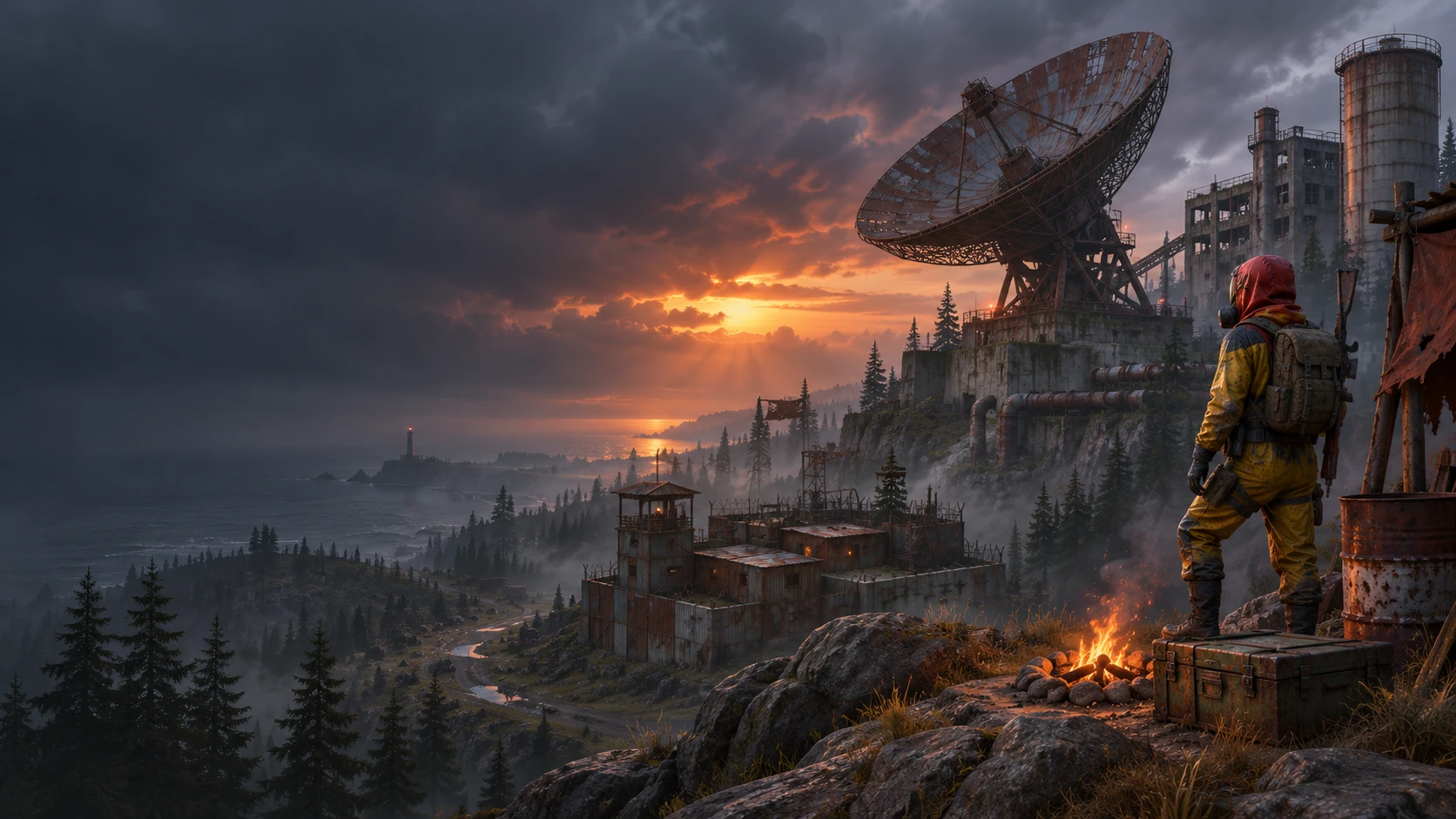
Choose an area that supports ordinary trips: gathering materials, learning a familiar monument and returning with cargo. Being next to a valuable event may look attractive, but it is less useful when every attempt to enter your own home becomes a fight.
Consider your actual playing time. A solo player with a short session may benefit more from a small repeatable route than from access to every high-value activity. Name the two or three tasks the location should support rather than demanding every possible advantage.
Inspect approaches and high ground
Walk around the entire site. Identify slopes, rocks, neighboring rooftops and other views onto the proposed entrance. Imagine coming home injured with a full inventory: where can you pause, look around and reach the door?
Check whether the terrain forces every exit through the same exposed corridor. A beautiful future balcony view is not the same as a practical place to live. If uncertain, run a trial resource route before moving your stored supplies.
Make sure the plan fits
Monuments and some world objects restrict building. Existing neighboring structures also affect the available space. Check the intended footprint in the game and test the directions in which you expect to expand.
Do not measure only the first square. You may need an airlock, a usable passage, equipment space and maintenance access. A foundation orientation that fits the shoreline now can later make the entrance cramped or block a required exit.
Compare candidates consistently
For each candidate, evaluate the resource route, the learning objective, entrance visibility and expansion options. Avoid an unsupported impression that somewhere is simply quieter. Repeated gunfire, active neighboring entrances and player movement offer more concrete information.
Choose a workable compromise and begin with a small structure you can maintain. No location guarantees protection from raids. The purpose is to make normal survival loops more understandable and manageable, not to discover a mythical risk-free building plot.
Before you leave
- Identify routine routes.
- Check high ground around the entrance.
- Test the footprint and expansion in game.
- Match base size to available playing time.
 I built a Rust base. What next? Keycards, monuments and Oil Rigs — lesson 2