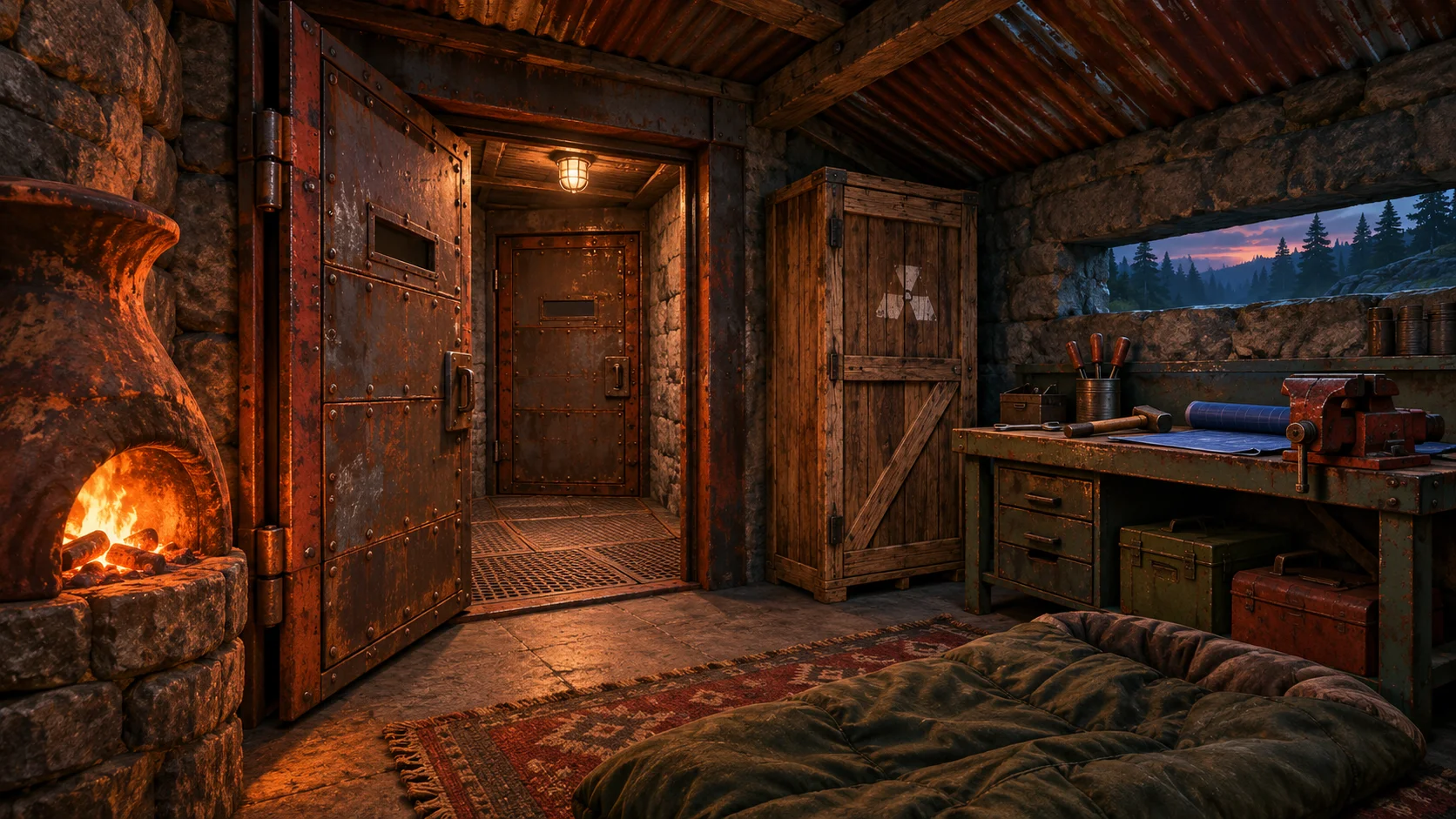
Check the shape before spending
Walk through the planned base before committing the main stockpile. Check the entrance, cupboard access, doors and equipment space. Replacing an unsuccessful idea on a build server is easier than discovering it after the rooms are full of supplies.
Keep the eventual purpose of each room in mind. If temporary storage will later become a furnace area, reserve that space now. A rebuild changes more than appearance: it changes your normal route through the structure.
Use the hammer deliberately
The official wiki identifies the hammer as the tool for upgrading building material through its right-click options. Inspect the selected block and material before confirming. Check the actual result afterward rather than relying only on the change in your resource inventory.
Set a work order: important entrance sections first, followed by the planned expansion. Avoid spending everything on one expensive corner while necessary parts remain unfinished. After upgrading, reopen the cupboard and inspect the current structure’s upkeep.
Test supports and surfaces on a sample
For an unfamiliar shape, build a small sample first. Inspect connections, supports and the passage left after enclosing it. An old image alone is not sufficient evidence that a complicated bunker still functions.
Check wall orientation and the behavior of inward and outward surfaces on that sample in the current version. This guide does not give a universal soft-side damage table: material, tool and updates matter. If a conclusion relies on exact damage, measure it separately and record the conditions.
Retest after relevant updates
November’s Printed and Polished update fixed inconsistencies in building-skin collisions and some triangle-structure damage cases. This illustrates why a historical building technique should not be treated as a permanent guarantee.
Keep a simple base plan and identify unusual parts that require repeat testing. After major changes, check opening, closing and ordinary movement before moving the design into a live base. A finished facade does not replace a working structure.
Before you leave
- Check movement and equipment space.
- Confirm each selected upgrade material.
- Test unusual supports and surfaces on a sample.
- Review upkeep after the work.
 Learning to build in Rust: peeks, electricity and a bunker — lesson 1