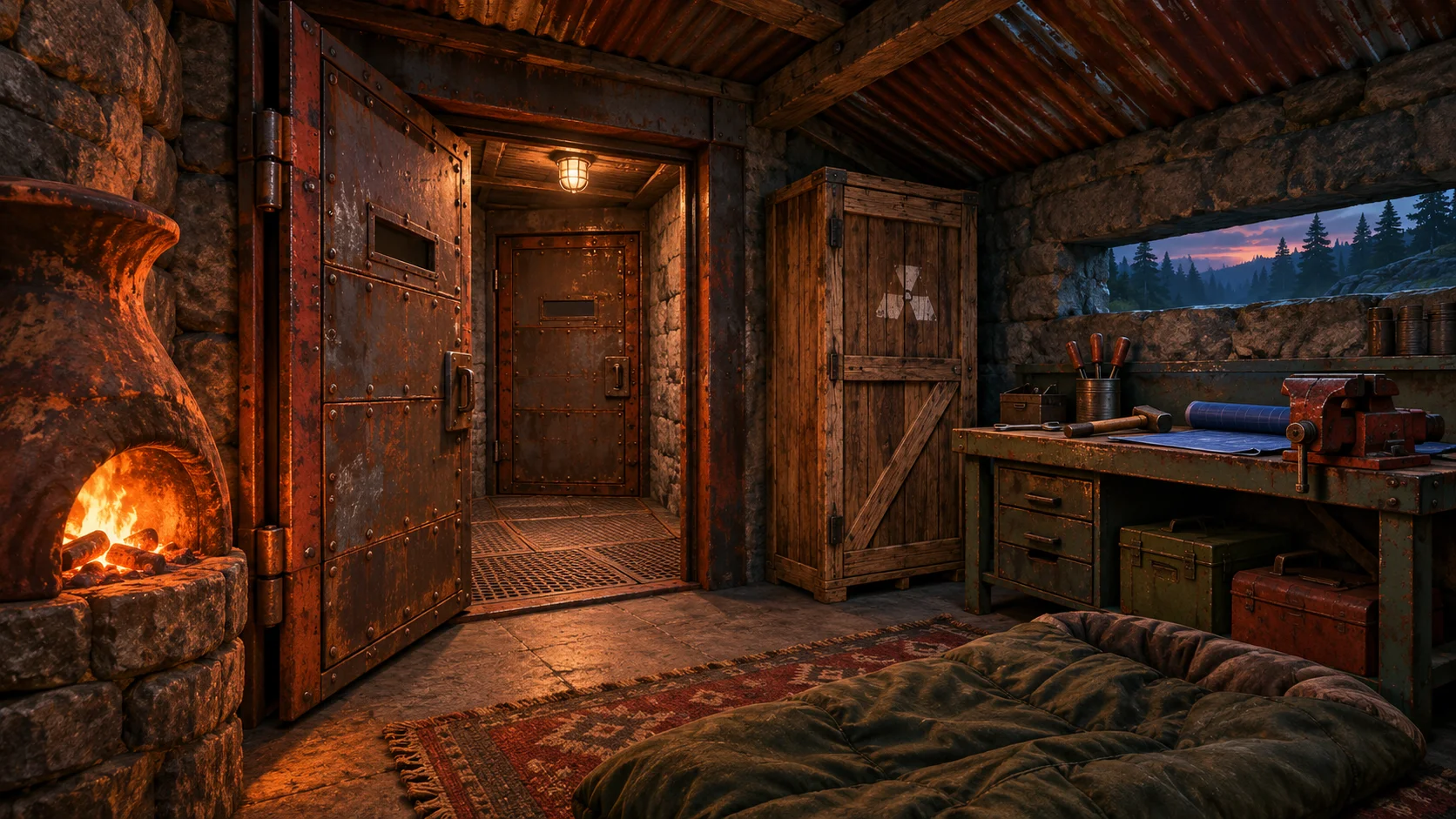
Describe the expected mechanism first
Write down which action closes the entrance and which opens it. What must the owner carry? Where do they stand? Does the process require an element left on the other side after closure? If these answers are unclear, an attractive video frame does not prove usability.
Start with an isolated section on a build server, not the main storage room. This guide does not reproduce unverified gaps, collision bypasses or invulnerability claims. The objective is understandable access behavior in your own version of the design.
Complete the cycle from both sides
Build the test, close and reopen it repeatedly, then imitate a normal gathering trip and return. Check that the required action is available from the intended position without guessing a tiny interaction point. The result should be repeatable rather than a one-time success.
Inspect available passages and exposed angles from outside. Ask a teammate to watch the owner’s movement without coaching. If protection depends on a visitor overlooking an obvious opening, calling the structure a bunker does not solve the issue.
Retest after actual changes
Additional walls, ceilings, furnishings and material upgrades can alter access to the relevant part. Recheck entry and exit after each change before moving important loot inside. Separately test an ordinary player reconnect and access to supplies afterward.
After a game update, compare the original guide date with recent changes and repeat the test on the current server. An old recording or a similar neighboring building does not establish compatibility. Server modifications may also alter building behavior.
Keep a way to recover access
Before experimenting, store reserves outside the test compartment and decide what to do if the mechanism fails. Avoid adding more floors while the basic cycle is unreliable. Record the exact failing step so the cause can be addressed.
RustGansh’s first lesson contains a training bunker build and check from 29:39. It illustrates a process, not compatibility of every design with every patch. This article provides a testing procedure; it does not promise a reproduced blueprint or a raid-cost calculation.
Before you leave
- Describe opening and closing actions in advance.
- Repeat the cycle from the intended positions.
- Check furnishings and a player reconnect.
- Retest after patches before storing valuables.
 Learning to build in Rust: peeks, electricity and a bunker — lesson 1