Separate home from recovery
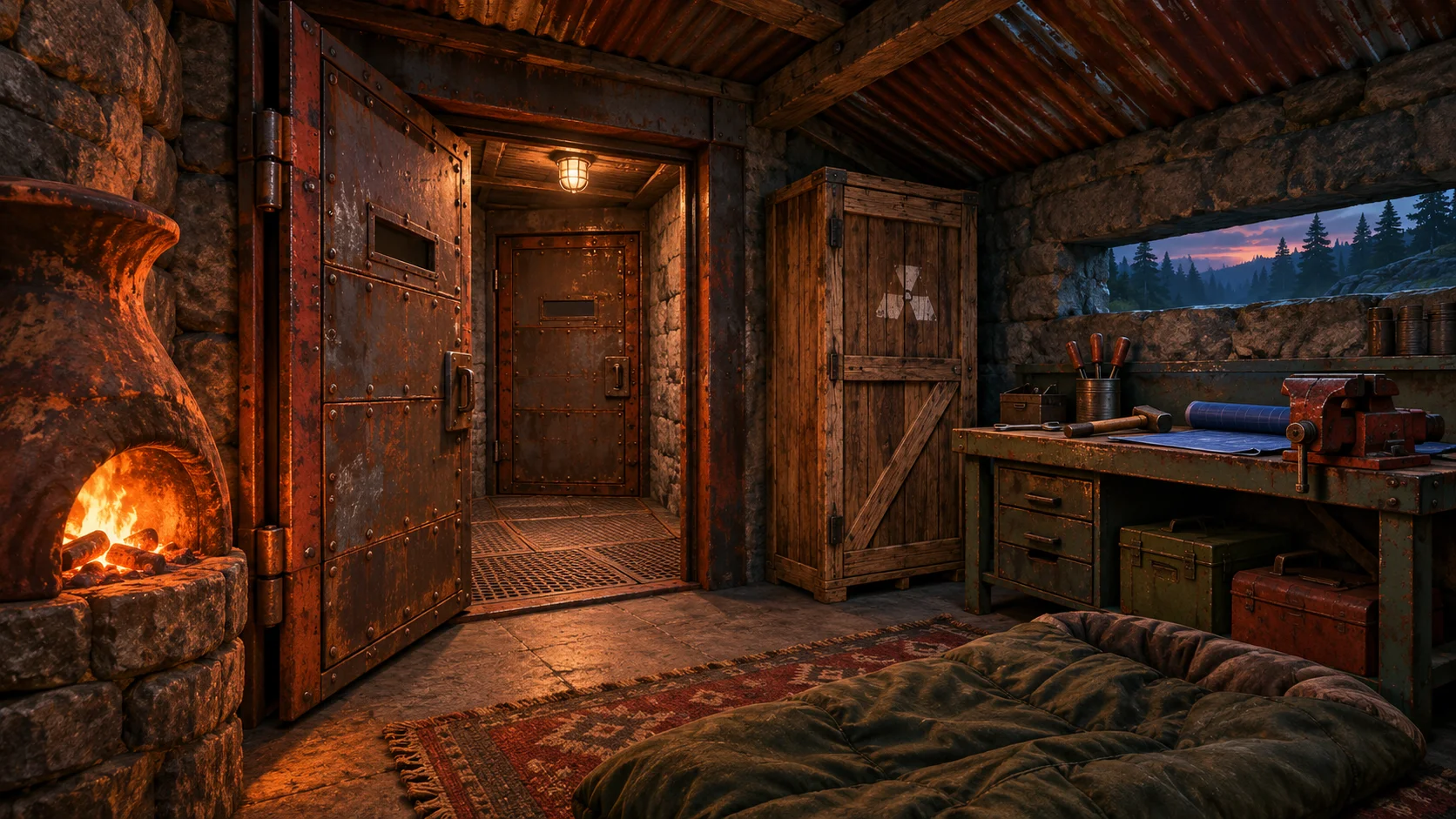
A sleeping bag provides a respawn location for its owner or an assigned player, with a reuse cooldown. Being able to place it does not mean you can immediately return to a fight. Check point availability in the interface, especially after a recent respawn.
For a home point, plan safe access to basic supplies. Spawning in a cramped room without a practical route through the doors or equipment is inconvenient even without an opponent. Test the location with your normal boxes and furnaces in place.
Use names that explain the location
A name should identify a place and purpose rather than merely a mood. Use a recognizable area or side of the base. Decisions after losing an inventory are often rushed, and several indistinguishable names make the recovery harder.
Power Trip introduced compass marking for a chosen respawn point and favorites on the death screen. If available in your current version and mode, configure these features before needing them and verify that the correct object is marked.
Prepare a minimal next-action plan
Keep a clear route from the home respawn to an ordinary kit you can realistically replace. Decide when recovering a body is worthwhile and when you should first restore tools and base security. The presence of a respawn point alone does not make returning profitable.
In a duo, agree who watches the area and who returns. State the chosen spawn and intended approach. Two unannounced, unequipped respawns rarely solve the original reason both players died.
Retest after changes
After rebuilding, walk from the bag to the exit. Check for placed objects, narrow passages and enclosed rooms. Do not assume the previous recovery plan still works after changing servers or beginning a new wipe.
This guide does not assign one universal cooldown to every mode; rules and limits can differ. The foundation is an available point, an understandable kit and a decision about the next task. A prepared recovery saves time even when the lost loot cannot be recovered.
Before you leave
- Give points distinct names.
- Check availability and access to supplies.
- Configure useful interface markers.
- Agree on a team recovery plan.
 I built a Rust base. What next? Keycards, monuments and Oil Rigs — lesson 2