Prepare the next departure in advance
Before a long trip, keep a recognizable recovery kit at home: necessary tools, some food, healing and access to storage. Do not mentally count the items in your only carried inventory as reserves. They may become inaccessible after a death.
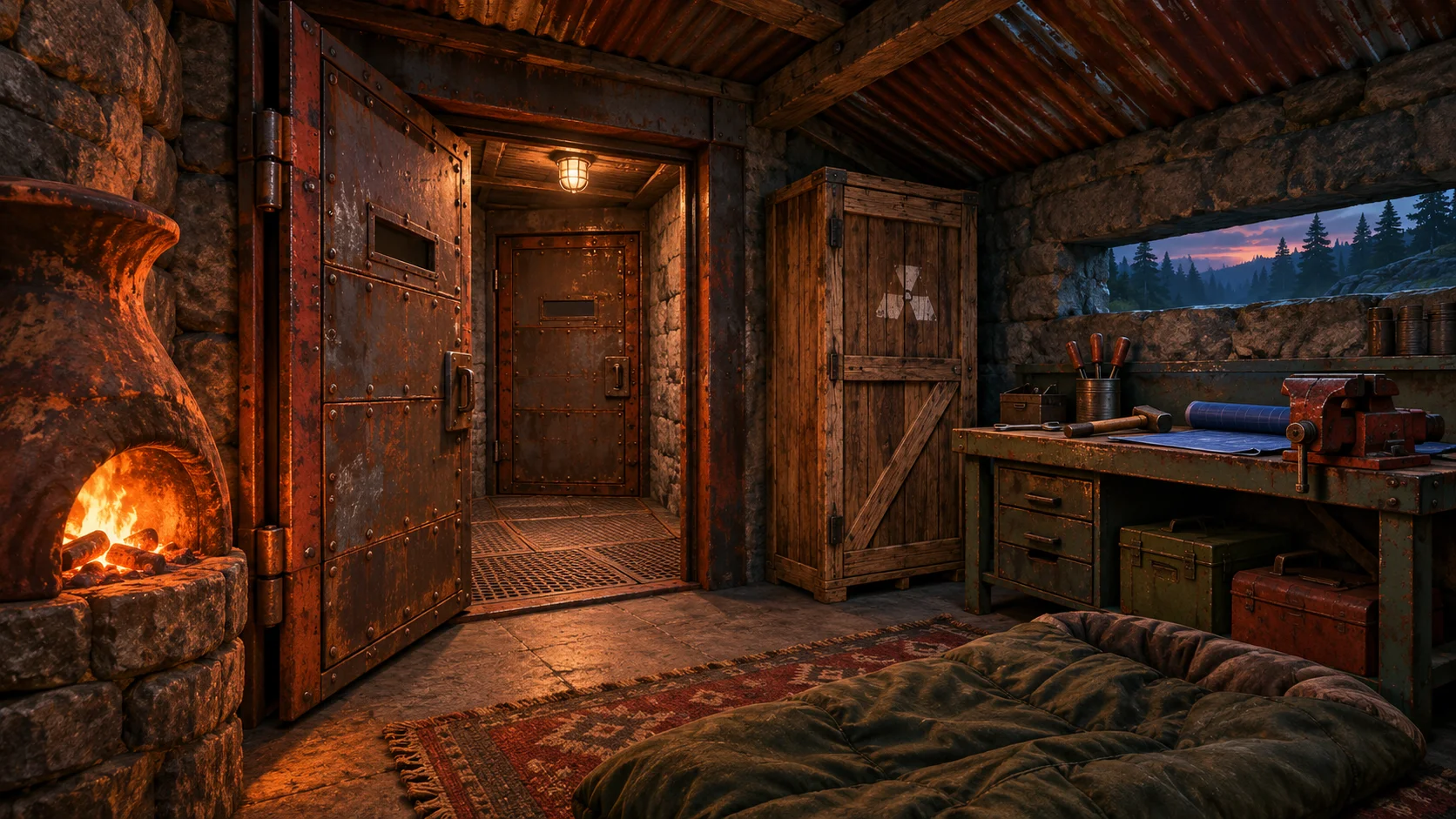
Check the respawn point and the route from it to supplies. A sleeping bag provides a spawn location but has reuse restrictions; read its current interface state. A solo plan should not depend on a teammate opening a door or bringing the missing item.
Do not automatically sprint back to the body
First ask where the death happened, what remains nearby and why the encounter was lost. If nothing changed, repeating the same approach often adds another lost kit. Separate the inventory’s value from the urge to win it back immediately.
Return when you have a specific observation and withdrawal plan. Sometimes rebuilding a basic loadout and taking a short route elsewhere is more useful. Losing items does not force you to accept an even larger risk straight away.
Use small, completed gathering loops
Leave for one objective: materials for an upgrade, a manageable component batch or a familiar monument section. Bring the result home before turning it into a long chain of activities with no unloading. One failure is then less likely to erase the entire evening.
Recheck upkeep and entrance usability after expanding. One player handles observation, storage and maintenance at the same time. As responsibilities grow, straightforward supplies and unobstructed access to essential objects matter more.
Correct a specific cause of loss
Record a short observation: healing without cover, missing an elevated angle, staying too long at a recycler or having no recovery supplies. Change one action on the next loop and compare the result. A promise never to die again is not a diagnosis.
RustGansh’s second lesson covers development after building a base and teamwork on a training server. This solo plan is an editorial application of general principles, not a claim that all lesson objectives were completed alone. Scale your tasks to what you can manage.
Before you leave
- Keep a separate recovery kit at home.
- Check respawning and access to supplies.
- Plan a body return rather than reacting emotionally.
- End each trip by unloading or deliberately withdrawing.
 I built a Rust base. What next? Keycards, monuments and Oil Rigs — lesson 2