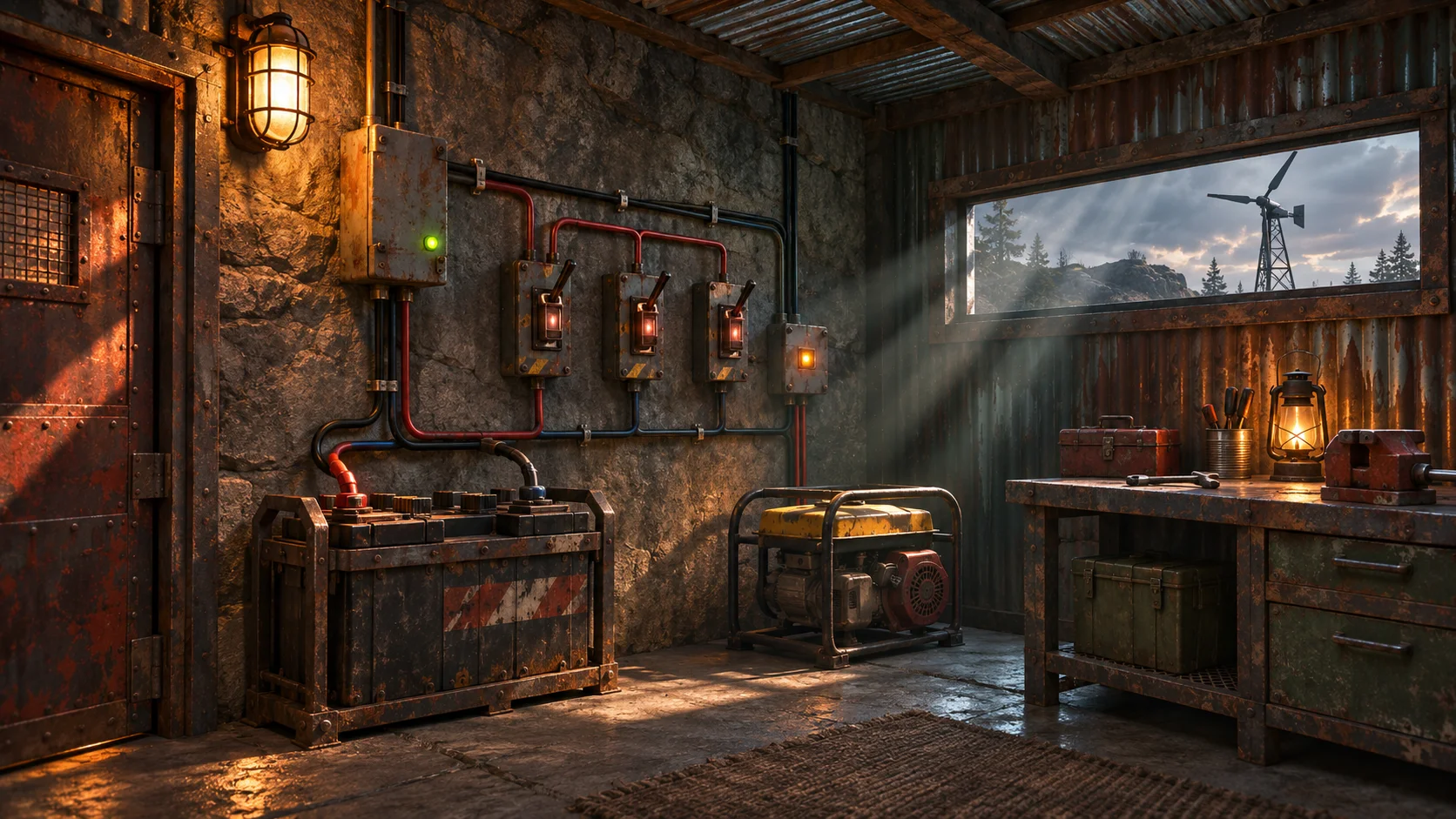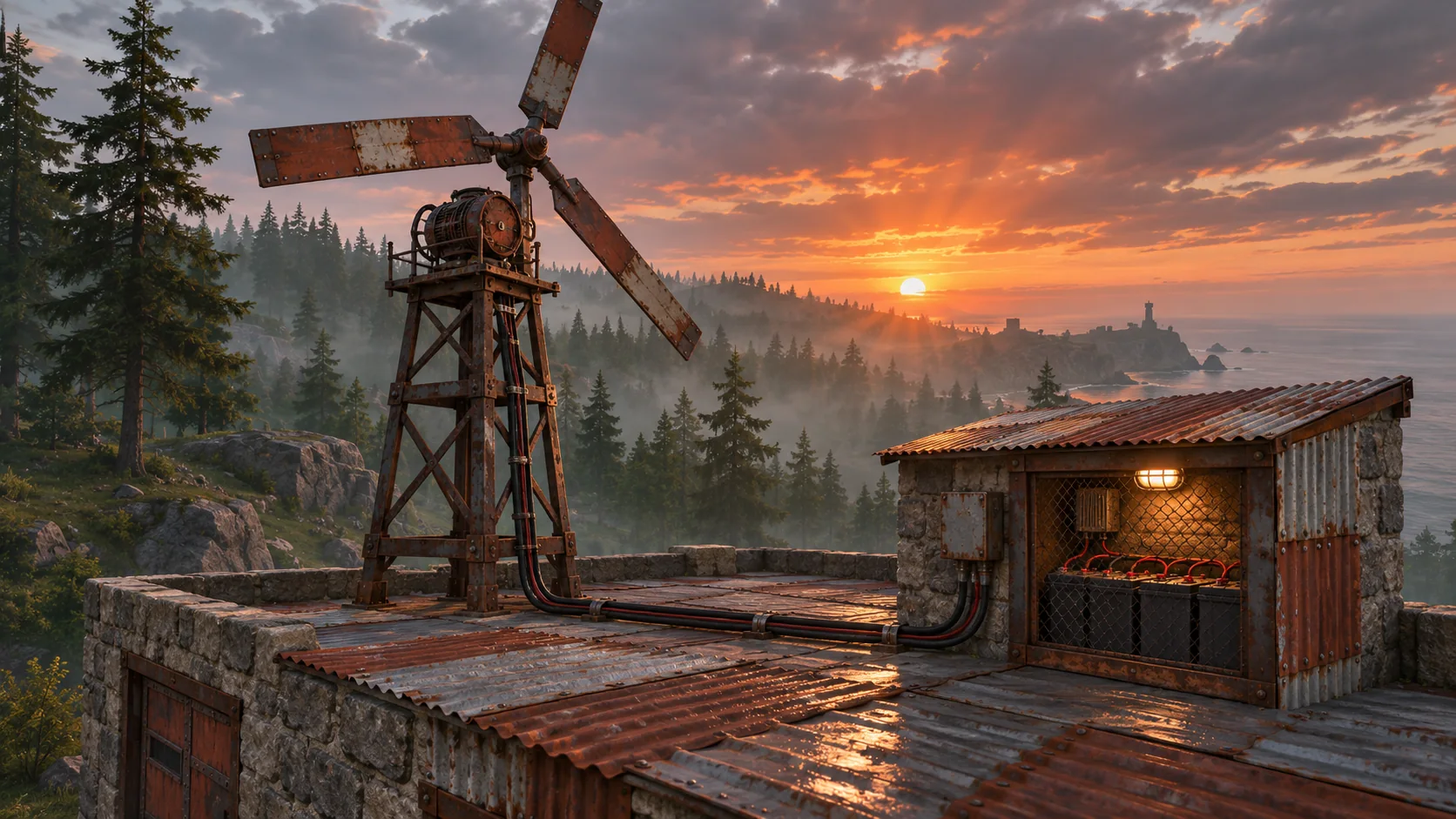
Define what the circuit must do
List devices that should run continuously and those needed only occasionally. Avoid connecting the entire base at once. Choose one understandable consumer and make sure you can trace its power from the beginning of the circuit to the end.
A solar panel turns sunlight into energy, with generation affected by light and panel angle. A favorable reading at one moment is therefore not a constant supply. For the first experiment, observing changing output is more useful than immediately maximizing the installation size.
Inspect the actual connections
A battery has a power input and a separate output for consumers. Socket labels and interface readings matter more than the assumption that a wire reaching the object means it is connected correctly. Start with a short chain that is easy to inspect.
Turn on the test device and check the source, battery and next component in order. Record the reading at each step. If power disappears at one point, fix that connection or setting rather than rebuilding the whole network at once.
Watch stored energy under load
Check more than whether a lamp lights or a device starts. Observe the stored supply over time. A full battery before the test can hide insufficient generation. Compare the starting state with the state after an ordinary load has run for a meaningful period.
Repeat in less favorable lighting and with additional devices switched on. Actual backup duration depends on the current component characteristics and load. An old diagram’s universal runtime cannot replace those conditions.
Expand in small steps
Once the test works, add one more component. Keep consumer groups understandable and preserve a way to disable nonessential equipment. Note which connections need checking after moving a panel, changing the roof or replacing the battery.
The first RustGansh lesson shows generation, a battery and troubleshooting on a training server. Use it to understand the inspection sequence. When transferring a circuit to your own base, check sockets, actual readings and operating conditions again.
Before you leave
- Group consumers by purpose.
- Check the battery input and output.
- Observe stored energy with the real load.
- Test changing light conditions.
 Learning to build in Rust: peeks, electricity and a bunker — lesson 1