Start with its purpose
Decide whether you are protecting an entrance, yard, landing spot or internal passage. Asking one position to cover everything can leave a hidden blind spot. Inspect the sector from ground level and possible high points.
The channel has Shorts about turret direction and placement near a helicopter. Treat them as prompts to inspect your own yard, not universal blueprints for every base.
Walk the opponent’s approaches
Have a teammate slowly follow the main routes. Note where walls, slopes or your own transport block visibility. Check whether an open door or recently placed object interrupts the view.
Verify access settings and device behavior under the current server rules. No reaction is not proof that a route is safe: missing power or an incorrect setting can also explain it.
Think about maintenance
You should be able to service the device without unnecessary exposure. Trace its power supply and verify that changes elsewhere in the circuit do not quietly disable the defense.
Repeat the inspection after changing the yard, adding a wall or moving the landing area. A useful position is defined by tested approaches rather than how symmetrical it looks on the roof.
Before you leave
- Define the sector being protected.
- Check obstacles and elevated approaches.
- Keep maintenance and power checks accessible.
Related video
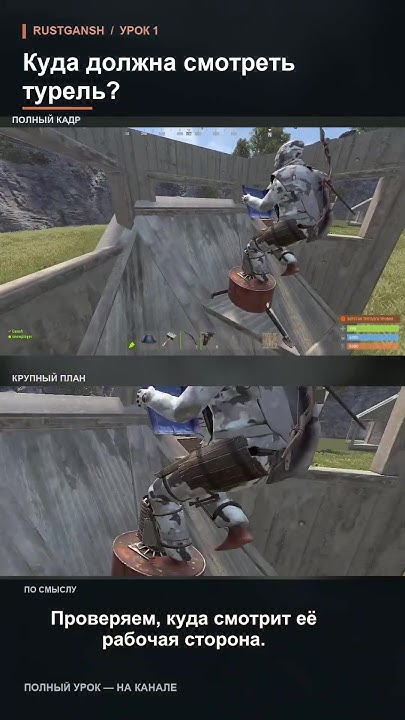 Which direction should a turret face in Rust?