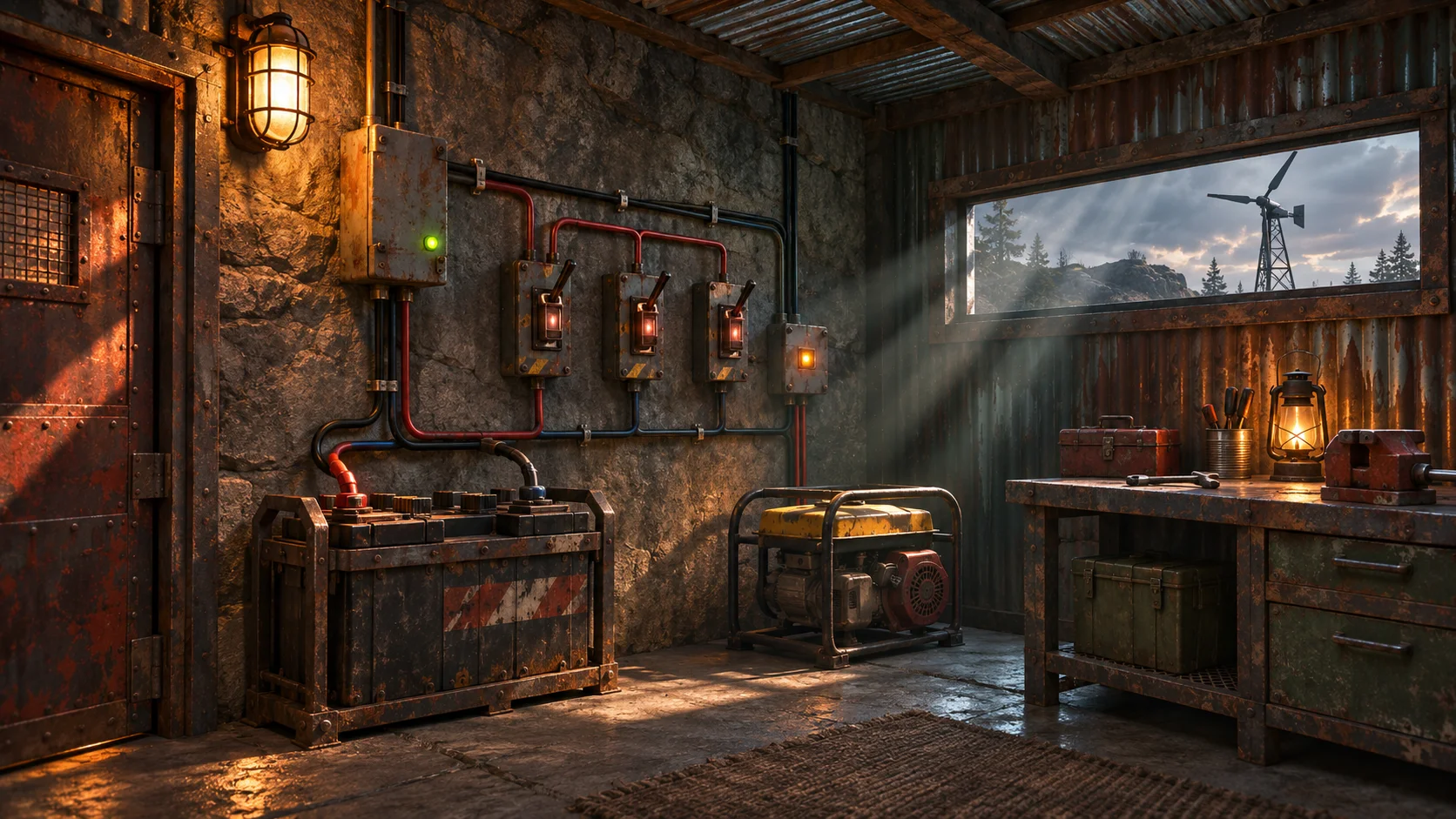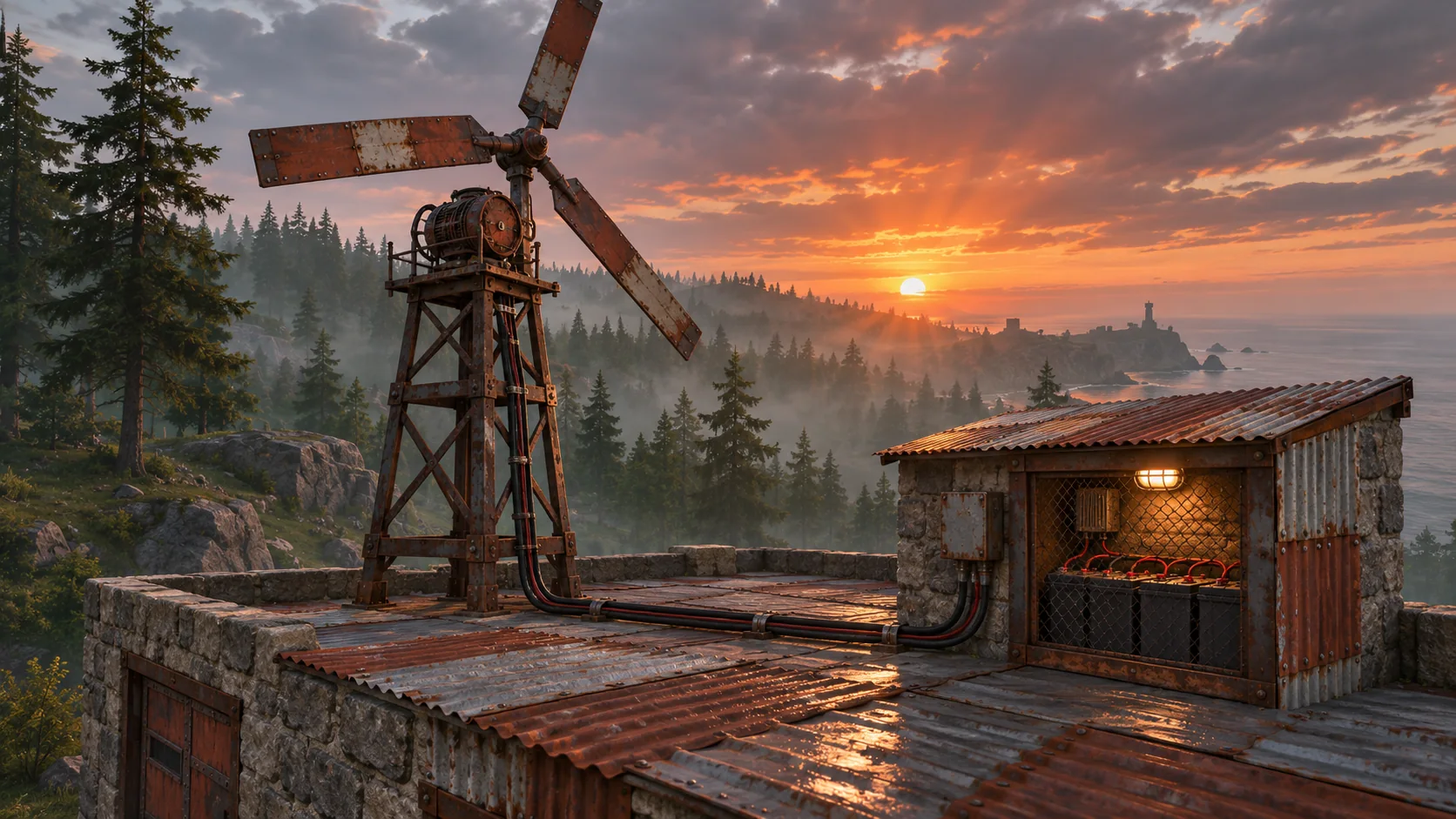
Understand the role of height
The official turbine description connects output to wind speed and notes stronger winds at higher altitudes. Placement therefore affects the result. A reading at one moment should not be treated as a guaranteed continuous power level.
First identify the load you intend to supply. If the circuit is not understood yet, a tall expensive structure will not help find a mistaken socket. Test the path through storage to a consumer using a simple arrangement.
Compare installation options
On a practice server, prepare two reasonable heights and positions. Observe each over different times. Keep the consumer load the same during comparison; otherwise you are evaluating several changes simultaneously.
Record less favorable readings as well as the best one. A supply that only just covers demand during its best moment needs attention to storage and consumption. Repeat the test under the actual conditions after moving the idea to your main server.
Keep maintenance practical
Plan how to reach the equipment, inspect it and restore a connection. For a high installation, consider ordinary movement, roof access and the exposure of the person doing the work. Avoid making routine maintenance depend on risky jumps.
Inspect from outside whether the supporting structure creates an easy approach to the base. Check its effect on sight lines, nearby doors and a planned landing area. Electrical efficiency is only one part of suitable placement.
Evaluate reserves with consumption
Watch the battery during ordinary base use and then with additional equipment enabled. Separate important devices from optional loads. If the reserve falls, diagnose why before deciding between another source and changing consumption.
The RustGansh Short about turbine height provides a question to investigate in your own design. It does not promise identical output on every map. This guide gives no universal floor-count height: installation geometry and server conditions deserve observation.
Before you leave
- Identify the expected load.
- Observe output in different conditions.
- Keep maintenance access usable.
- Inspect outside access through the supports.
Related video
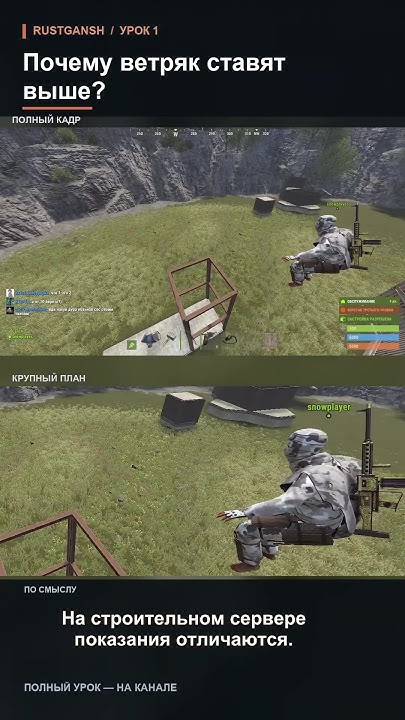 Why place a wind turbine higher in Rust?